
Are Current World Events Stressing You Out — and What Can You Do About It?
- Tiffany Kettermann
- Mar 29
- 6 min read
By Health Allies Counseling · healthalliescounseling.com Proudly Serving Portland, Oregon & Surrounding Areas
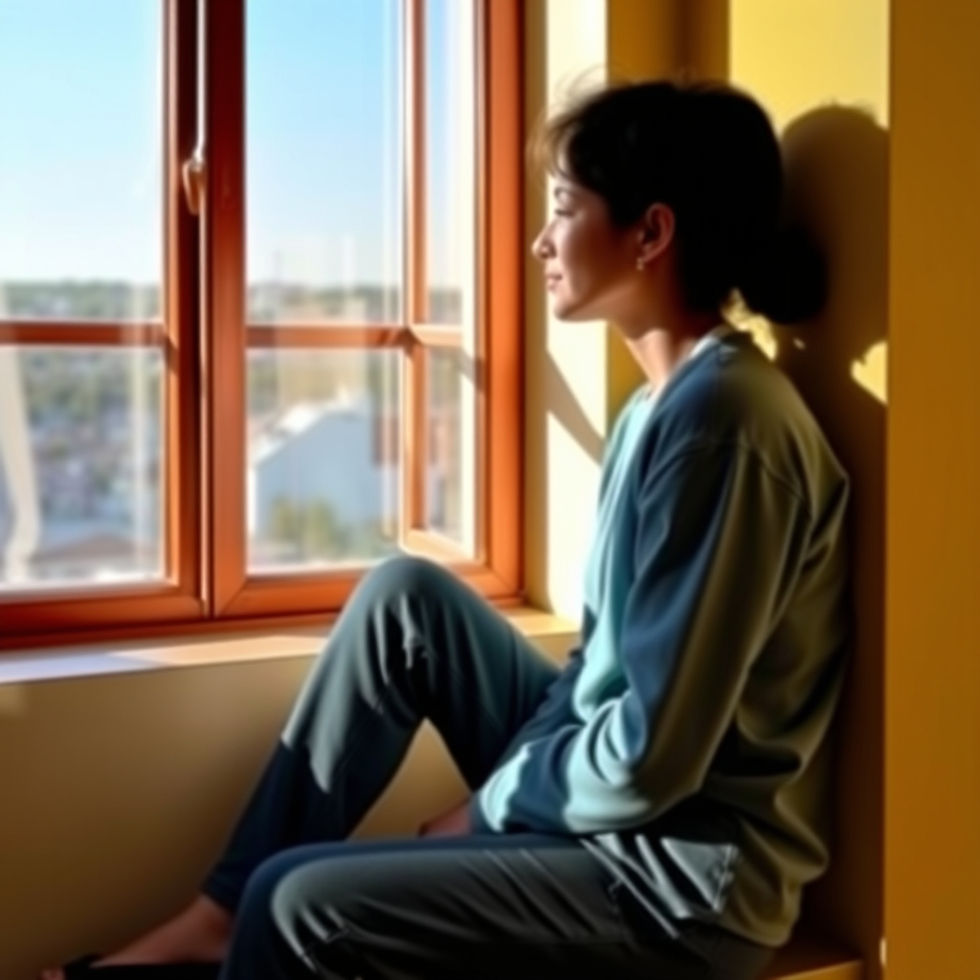
The Stress of Current World Events Is Real — and You Are Not Alone
If you have been feeling more anxious, overwhelmed, or emotionally exhausted lately, you are not imagining it. The stress of current world events — from political uncertainty and economic pressures to global conflicts and climate anxiety — is affecting people across the country, including right here in Portland, Oregon. At Health Allies Counseling, we work every day with individuals who are struggling to stay grounded in a world that can feel increasingly unpredictable and frightening.
This kind of stress has a name. Researchers and mental health professionals refer to it as news-induced stress, eco-anxiety, or collective trauma — and it is a growing concern for therapists throughout Oregon and beyond. Whether you find yourself doom-scrolling before bed, snapping at the people you love, or simply feeling a low hum of dread you can't quite shake, these are signs that the weight of the world is taking a real toll on your mental health.
Why Are Current World Events So Hard on Our Mental Health?
Human beings are wired for connection and safety. When the news cycle delivers a constant stream of threatening information — wars, economic instability, political polarization, natural disasters — our nervous systems respond as if we personally are in danger. The stress response activates, cortisol rises, and our bodies shift into survival mode. The problem is that unlike the immediate, short-term threats our stress response evolved to handle, the stress of current world events has no clear endpoint. There is no moment where the threat passes and we get to exhale.
This chronic, low-grade activation of the stress response can lead to a range of mental and physical health challenges, including anxiety and panic attacks, depression and low mood, difficulty sleeping, trouble concentrating, irritability and relationship conflict, physical symptoms such as headaches, fatigue, and digestive issues, and a growing sense of hopelessness or helplessness.
Research from the American Psychological Association consistently finds that a significant majority of Americans report current events as a major source of stress. For many people in Portland, Oregon and throughout the state, this has been compounded by local concerns — housing costs, wildfire seasons, and community changes that add another layer to an already heavy load.
News Fatigue, Doomscrolling, and Anxiety: Recognizing the Signs
One of the trickiest aspects of world events stress is that it can disguise itself. You might not connect your sleep problems or irritability to the hours you spent reading distressing headlines. Some signs that current events may be affecting your mental health more than you realize include constantly checking news or social media for updates, feeling unable to disconnect even when you want to, nightmares or intrusive thoughts related to world events, withdrawing from friends, family, or activities you used to enjoy, feeling numb or emotionally shut down, and experiencing physical tension especially in your shoulders, jaw, or chest.
If any of these sound familiar, you are not weak or overreacting. You are having a very human response to genuinely difficult circumstances — and support is available.
Practical Ways to Manage the Stress of Current World Events
While therapy is one of the most effective tools for addressing world events stress, there are also steps you can take right now to help regulate your nervous system and protect your mental health.
Set intentional news boundaries. Choose one or two specific times per day to check the news, and stick to them. Avoid news consumption first thing in the morning or within an hour of bedtime. Give your nervous system stretches of time where it is not receiving threatening information.
Curate your social media feed. Unfollow or mute accounts that consistently leave you feeling worse. Seek out content that balances difficult realities with stories of resilience, community, and hope.
Ground yourself in the present. When anxiety about future events spikes, grounding techniques — such as the 5-4-3-2-1 sensory method — can help bring you back into the present moment. Notice five things you can see, four you can touch, three you can hear, two you can smell, and one you can taste.
Move your body. Physical activity is one of the most well-researched interventions for stress and anxiety. Even a 20-minute walk through one of Portland's many green spaces can meaningfully shift your nervous system state.
Connect with community. Isolation amplifies anxiety. Reach out to people you trust — whether that means a coffee with a friend, a community meeting, or a support group. Portland, Oregon has a rich network of community organizations where people are working together on the issues that matter to them, which can transform helplessness into agency.
Limit your consumption of distressing content before bed. Sleep is essential for emotional regulation. Create a wind-down routine that does not include scrolling through headlines.
When Self-Help Isn't Enough: The Role of Professional Counseling
Sometimes, the stress of current world events goes beyond what lifestyle adjustments can address on their own. If your anxiety is interfering with your daily life, relationships, or ability to function at work, it may be time to speak with a professional.
At Health Allies Counseling, our therapists are trained in evidence-based approaches to treating anxiety, depression, and trauma — including approaches specifically suited to the kind of pervasive, ongoing stress that world events can create. These include Cognitive Behavioral Therapy (CBT) for challenging catastrophic thinking patterns, EMDR therapy for processing distressing news-related trauma, mindfulness-based approaches for building present-moment resilience, and somatic therapies that work directly with the body's stress response.
You do not need to be in crisis to benefit from therapy. Many of our clients in Portland, Oregon come to us simply because they want support in navigating a world that feels overwhelming — and they leave with tools, insight, and a renewed sense of stability.
For more on how we approach anxiety and stress at our practice, visit our therapy services page.
The Importance of Meaning-Making in Difficult Times
One of the most powerful antidotes to the helplessness that world events stress can create is meaning-making — finding ways to connect your pain to purpose. This might look like volunteering for a cause you care about, engaging in creative expression, deepening your spiritual or contemplative practice, or simply being more intentional about the values that guide your daily life.
Research published by the American Psychological Association on stress and coping suggests that individuals who find meaning in difficult circumstances tend to show greater psychological resilience over time. This does not mean toxic positivity or pretending things are fine when they are not. It means allowing your concern for the world to be an expression of your values — and then channeling that concern into something generative.
Viktor Frankl, the psychiatrist and Holocaust survivor, wrote that we cannot always choose our circumstances, but we can choose how we respond to them. That capacity for response — for agency within limitation — is something therapy can help you cultivate, even in the most uncertain of times.
You Deserve Support — Not Just Survival
Living in a constant state of low-grade stress is not something you simply have to accept. The stress of current world events is real, it is significant, and it deserves real support — not just tips for pushing through.
At Health Allies Counseling, we believe that mental health care is not a luxury. It is a fundamental part of living a full and meaningful life, especially when the world around us feels destabilizing. We work with adults, teens, and families throughout Portland, Oregon and offer telehealth counseling services to clients across the state — so wherever you are in Oregon, we can help.
Learn more about what makes our approach different by visiting us at healthalliescounseling.com.
Health Allies Counseling Serves Oregon — Including Portland and Beyond
We are proud to support clients across Oregon, including Portland, Beaverton, Hillsboro, Lake Oswego, Gresham, Tigard, Salem, Eugene, Bend, Medford, Corvallis, and statewide via telehealth.
Ready to Feel Like Yourself Again?
You don't have to carry the weight of the world alone. The caring team at Health Allies Counseling is here to help you build resilience, find calm, and reconnect with what matters most — even when the news says otherwise.
📞 Call us · 🌐 healthalliescounseling.com · 📍 Portland, Oregon & statewide telehealth
Accepting new clients · Most insurance accepted · Evening & weekend hours available
This blog is for informational purposes only and does not constitute medical or psychological advice. If you are experiencing a mental health crisis, please contact the 988 Suicide & Crisis Lifeline by calling or texting 988.


Comments